One data system for apps, agents, and analytics.
Run transactional data, reporting, vector search, and realtime updates from the same foundation. Build faster without stitching together separate systems.
Most apps outgrow their data layer before they outgrow their team.
Most teams start with multiple systems. Docyrus gives them one foundation instead.
A transactional foundation that holds at scale.
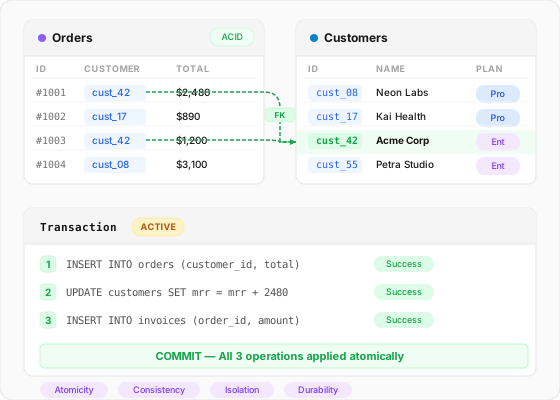
Start with a relational core built for production workloads, with foreign keys, referential integrity, and full ACID transactions from day one.
Foreign Keys & Referential Integrity Define relationships between entities and enforce them at the database level. Data stays consistent without application-layer workarounds.
ACID Transactions Multi-step operations either fully succeed or fully roll back. No partial writes, no silent corruption.
Add fields without migrations or downtime.
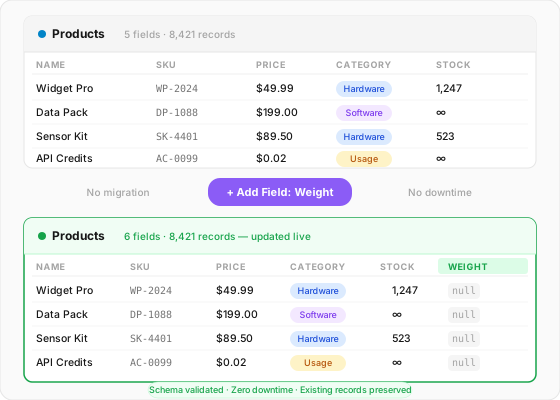
Extend your schema incrementally. Add fields, adjust types, and introduce optional columns without writing migration scripts or coordinating deploy windows.
Add Fields Without Migrations Add fields directly in the platform. Existing records stay valid, and older rows simply return null until the field is populated.
Validate Schema Changes Early Docyrus validates schema changes before they go live, so conflicting updates are caught before they reach production.
Vector embeddings and structured data, unified.
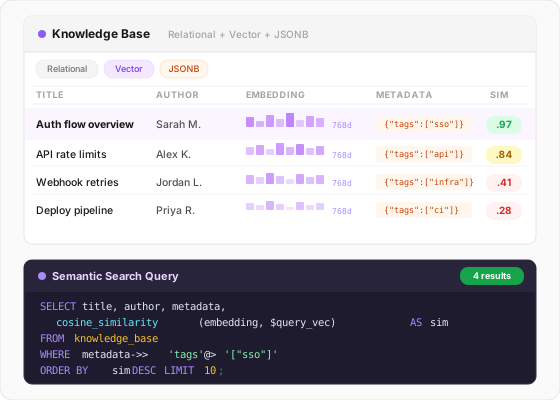
Store embeddings alongside relational data in the same system. Semantic search and AI features can use the same schema as the rest of your product.
Native Vector Columns Use a native vector column type powered by pg_vector. Run cosine similarity and nearest-neighbor searches directly in your queries.
Flexible JSON Payloads Store semi-structured data with full indexing and querying support. Mix schema-enforced columns with flexible JSON payloads in the same table.
Live data without a separate event bus.
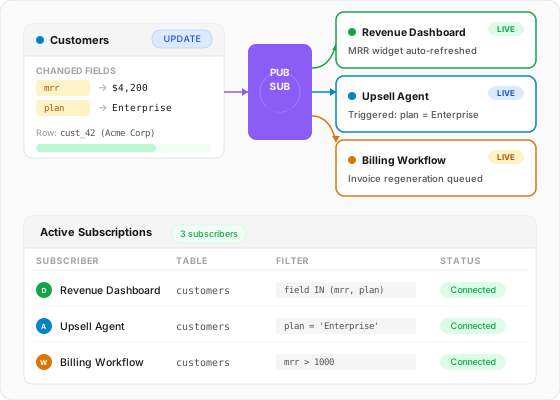
Built-in PubSub lets apps and agents react to data changes in real time, without Kafka, external queues, or polling workarounds.
Table-Level Change Streams Subscribe to inserts, updates, and deletes on any table. Dashboards, agents, and automations can react as changes happen.
Subscribe Only to Relevant Rows Listen only to the rows that matter. Subscriptions stay tenant-scoped and permission-aware, so apps and agents only see what they are allowed to see.
Query, isolate, and search from one data source.
These capabilities are built in, so the data layer is ready for real product use.
Built in, not bolted on.
Visual queries, tenant isolation, and vector search all run through the same schema, API, and permission model. You do not have to wire them together yourself.
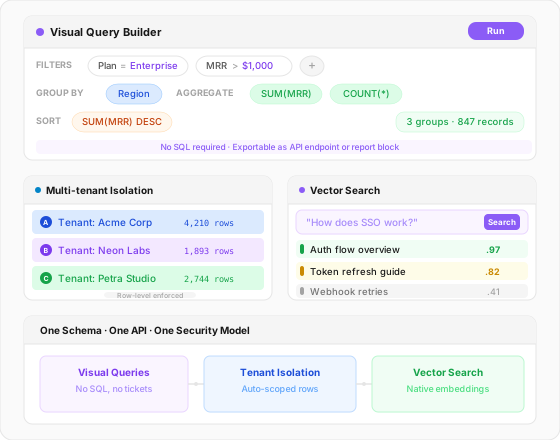
Visual Query Builder
Build filters, aggregations, and joins without writing SQL. Teams can explore data directly and engineers can reuse the same query definitions in products and reports.
Multi-tenant Isolation
Row-level tenant isolation is enforced in the database layer. Queries are automatically scoped to the right tenant, without hand-written where clauses.
Vector Search
Store embeddings with relational data and run semantic similarity queries natively, without adding a separate vector database.
Frequently asked questions about Data Infrastructure
What does Data Infrastructure do?+
Data Infrastructure is the shared Docyrus data layer for transactional records, reporting, vector search, and real-time updates.
When should teams use Data Infrastructure?+
Teams should use it when they want one data foundation instead of stitching together separate stores for app data, analytics, and AI search.
How does Data Infrastructure work with the rest of Docyrus?+
It powers apps, agents, dashboards, and workflows from the same schemas and permission-aware query model.
Who is Data Infrastructure for?+
It is built for product teams, data-heavy operations teams, and builders creating multi-tenant SaaS products.